Subscription terms and prices
Prices published in rivals' product data, and the pause, skip and cancel wording on their subscription pages, read side by side with yours.
Product · Tools
Product · Intel loops · recurring, in build
Solutions · By problem
Solutions · Online stores
Resources · Learn
Resources · Guides and ideas
Resources · Company
Coffee shoppers read the roast date, the origin, the grind options and the subscription terms, then check who delivers free and where the cancel link sits. Price per bag comes after. An Intel loop reads your store beside three roasters you name, on the same eight categories, and shows which page loses the sale.
A coffee shopper usually arrives with a habit already formed: a roast level, a brewing method and a rough idea of what a bag should cost. What moves them between roasters is freshness and trust. A visible roast date, a clear origin story and tasting notes a home brewer can follow carry more weight than a polished hero image.
A subscription is a commitment, so the shopper reads the terms: pause, skip, change the grind, and what the first-bag offer turns into on the second delivery. A rival whose cancel terms sit on the product page can win against a better coffee.
Delivery and grind options close the deal. Shoppers notice the free-delivery threshold, whether whole bean and several grinds are offered on the same page, and whether letterbox-friendly packaging is mentioned. Reviews that talk about freshness on arrival do more work than reviews that only say the coffee was nice.
A composite, illustrative week of the kind of thing that happens in this trade. It is not a customer's diary and nothing in it is measured.
A roaster you compete with adds a smaller, lower-priced subscription and puts it at the top of the homepage. Your subscribers have not noticed yet, but new visitors comparing the two of you will.
Is my pricing right against rivals?A competitor publishes a limited release with a long origin story and a farm profile. It is the kind of page that gets shared, and you only find out when a customer asks whether you have anything similar.
What changed on competitor sites?Two or three new reviews of a rival complain about beans arriving without a roast date. That is an opening, if your own product pages make your roast date impossible to miss.
Why aren't my reviews converting?A competitor starts running ads for gift subscriptions and coffee bundles. You want to know whether they lead with price, with the gift message or with the coffee itself before you brief your own.
Are rivals' ads beating mine?Plenty of visitors reach your brewing-kit bundle, very few buy. You need to know whether the page loses them on price, on delivery terms or on the description before anyone redesigns it.
Rebuild, or fix what we have?Public evidence about you and the rivals you name. Where a read depends on a loop that is still in build, the loop cards below say so.
Prices published in rivals' product data, and the pause, skip and cancel wording on their subscription pages, read side by side with yours.
New and removed pages from each rival's sitemap, so a limited release or a new brewing guide shows up as a change, linked to the page.
Google reviews and review-site text for you and each rival, grouped into themes such as roast date, packaging, delivery and taste.
Whether the free-delivery threshold, the grind choices and the delivery promise are clear on the product page, where the decision is made.
Which rivals bid on paid keywords for terms like coffee subscription or fresh coffee beans, and where each one ranks in ordinary search.
Your prices, delivery terms and offers beside the rivals you choose, and what a discount or delivery threshold costs in margin.
New pages, price changes and promotions on the rival sites you choose.
Whether your reviews show on the pages where buyers decide, what they say beside your rivals' reviews, and which themes buyers repeat.
The search terms rivals pay for and a modelled spend range today. Which ads they start, stop and keep running once the ad watch ships.
A loop re-runs a read on a cadence you choose and reports what changed. None runs for customers yet, and none is on sale.
Watches the rival sites you choose and reports what changed since the last run: new pages, prices and promotions.
Collects new reviews for you and the rivals you name, groups them into themes, and shows which themes moved.
Keeps a record of the ads your rivals run, so you can see which are new, which stopped and which have run longest.
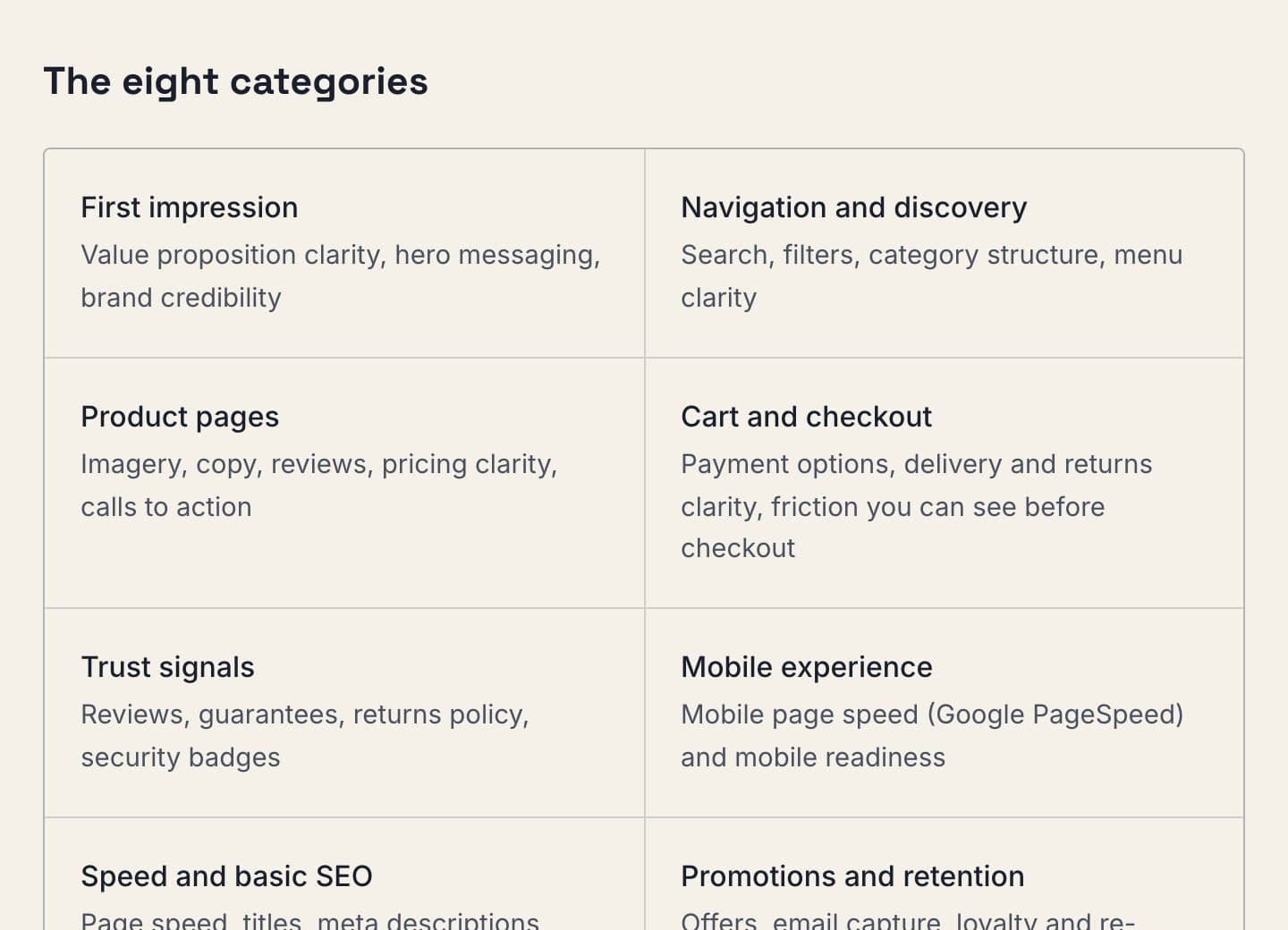
Yes, as part of an Intel loop. It compares your store with three rivals you choose across eight categories, from first impression to cart and checkout, and a specialist checks every finding before you see it. Subscription terms, delivery clarity and product-page detail are all read.
That is what the competitor website monitor is being built to do: read prices from rivals' product data on each run and show what changed. It is in build and not on sale yet. Today, an Intel loop gives you a one-off comparison.
An Intel loop's review read uses Google ratings and review counts, plus review text found on review sites and on each store's own pages. Some review sites block reading from time to time, so each source is treated as present or absent rather than guessed.
The free Insight Report and an Intel loop both start without a card. If the comparison finds nothing worth fixing, you stop there and owe nothing.
An Intel loop compares your store with three rivals you choose, across eight categories, checked by a specialist.