Launches, bundles and sizes
New product and bundle pages from rivals' sitemaps, and prices from their product data, so a starter kit or a new size is visible as a change.
Product · Tools
Product · Intel loops · recurring, in build
Solutions · By problem
Solutions · Online stores
Resources · Learn
Resources · Guides and ideas
Resources · Company
A skincare shopper reads the ingredients list, the skin-type notes and the reviews from someone with their skin before buying, then looks for a travel size. The rival brands on that shortlist change bundles and launches often. An Intel loop reads your store beside three you name, product page against product page, and shows where the choice is made.
A skincare shopper is usually trying to solve something specific, and they want to know a product is meant for someone like them. Product pages that say who it is for, what is in it and how to use it give the shopper something to hold on to. Vague pages push them back to the search results.
Reviews carry unusual weight in this category, especially reviews from people who describe their own skin type or concern. Shoppers scan for those details and for complaints about reactions, texture or scent. A store with plenty of reviews that never says anything specific is at a disadvantage against one with fewer, more detailed ones.
Trying something new is a risk the shopper prices in. Travel sizes, sample offers, bundles, subscribe-and-save and a clear returns position on opened products all lower that risk. Rivals change these offers often, which is why the comparison goes stale quickly.
A composite, illustrative week of the kind of thing that happens in this trade. It is not a customer's diary and nothing in it is measured.
A competitor adds a discovery set of smaller sizes and promotes it across their homepage. Shoppers unsure about committing to a full size now have an easier first step with them than with you.
Is my pricing right against rivals?A rival publishes a set of pages explaining their key ingredients. The pages are short, written for a shopper, and linked from every product. You want to know what they cover before deciding whether to answer.
What changed on competitor sites?Your detailed reviews sit on a separate page, while a rival shows skin-type filters on every product. Shoppers comparing the two see their proof and miss yours.
Why aren't my reviews converting?A competitor's ads in a creator-led style seem to stay live while others come and go. You want a record of which hooks they keep paying for before you brief your own.
Are rivals' ads beating mine?A new visitor lands on your serum page from a search. You want to know whether the page answers who it is for, what is in it and what happens if it does not suit them.
How do buyers see us?Public evidence about you and the rivals you name. Where a read depends on a loop that is still in build, the loop cards below say so.
New product and bundle pages from rivals' sitemaps, and prices from their product data, so a starter kit or a new size is visible as a change.
Review text for you and your rivals grouped into themes such as texture, scent, skin reaction, packaging and delivery.
Whether each product page says who it is for, how to use it and what the returns position is, read the way different buyer types read it.
Gift-with-purchase offers, sample promotions and discount banners on the rival pages you choose.
Rivals' ads where a public ad library returns them, and the paid keywords they bid on for product and concern terms.
Five buyer types read your site and your rivals' on one rubric, and you read what assistants answer about your trade, word for word.
Whether your reviews show on the pages where buyers decide, what they say beside your rivals' reviews, and which themes buyers repeat.
Your prices, delivery terms and offers beside the rivals you choose, and what a discount or delivery threshold costs in margin.
The search terms rivals pay for and a modelled spend range today. Which ads they start, stop and keep running once the ad watch ships.
A loop re-runs a read on a cadence you choose and reports what changed. None runs for customers yet, and none is on sale.
Collects new reviews for you and the rivals you name, groups them into themes, and shows which themes moved.
Watches the rival sites you choose and reports what changed since the last run: new pages, prices and promotions.
Keeps a record of the ads your rivals run, so you can see which are new, which stopped and which have run longest.
No. The reads compare how clearly your store and your rivals' stores present products, offers and proof. Whether a particular claim is permitted is a question for your regulatory adviser.
The review analysis groups review text into themes and quotes the reviews behind each one. Where reviewers describe their skin type or concern, that shows up in the themes; where they do not, it cannot be invented.
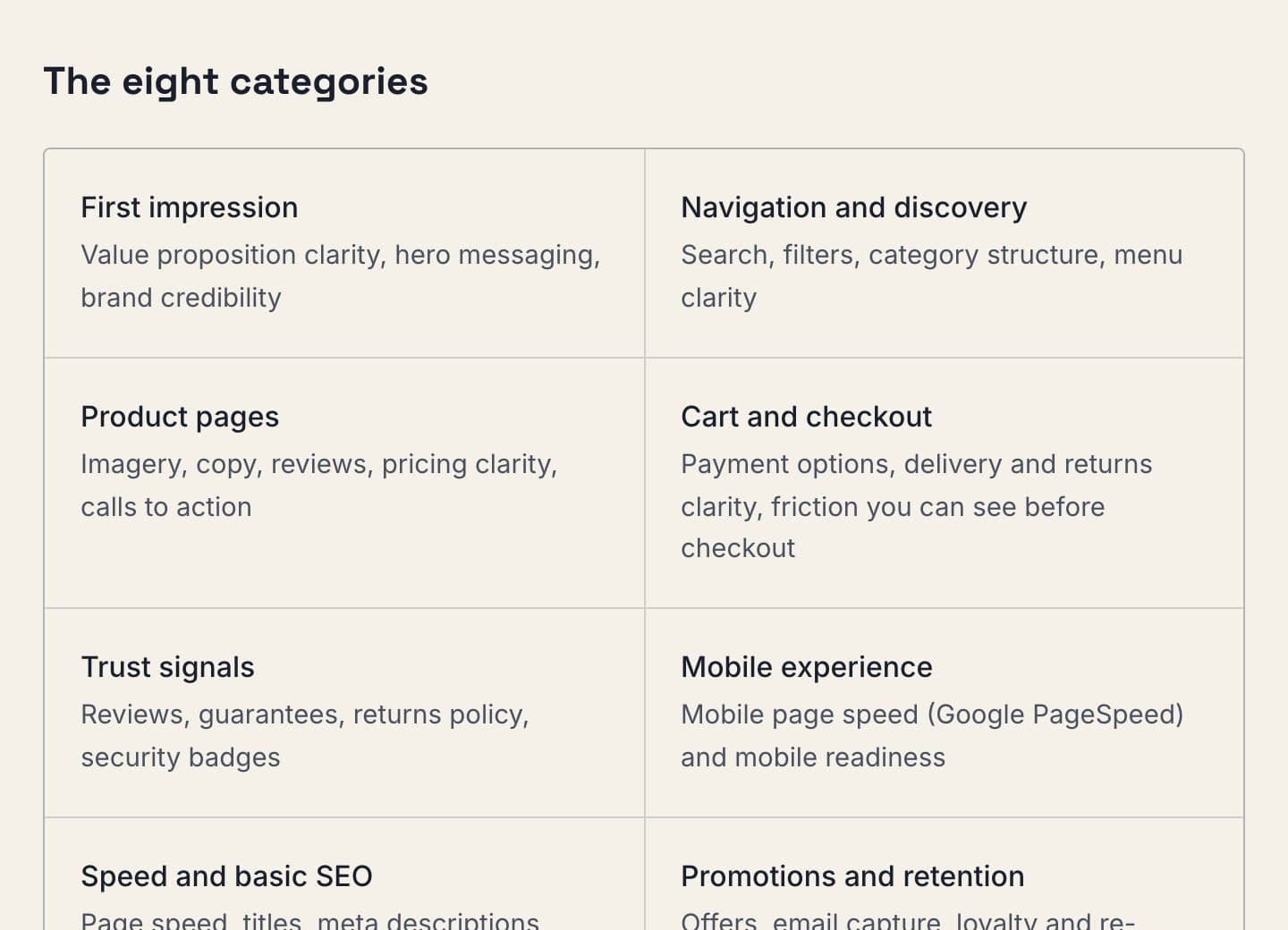
You name three rivals. An Intel loop compares your store with theirs across eight categories, from first impression to cart and checkout, and a specialist checks every finding before you see it. You get a scorecard and the top quick wins.
The competitor website monitor is being built to report new and removed pages and price changes on the rival sites you choose. It is in build and not on sale yet.
An Intel loop compares your store with three rivals you choose, across eight categories, checked by a specialist.